




Cybersecurity Services in India
Protect your business systems, manage cyber risk and improve your security readiness
Cloute Technologies helps businesses find weaknesses in their IT environment, strengthen the controls that protect it and prepare for security incidents. No service can stop every cyberattack, but a structured approach reduces risk and shortens the time it takes to spot and respond to a problem.
Cybersecurity Services
- Cybersecurity Risk Assessment
- Incident Response and Recovery
- Threat Detection and Response
Overview
Comprehensive Cybersecurity Solutions for Businesses
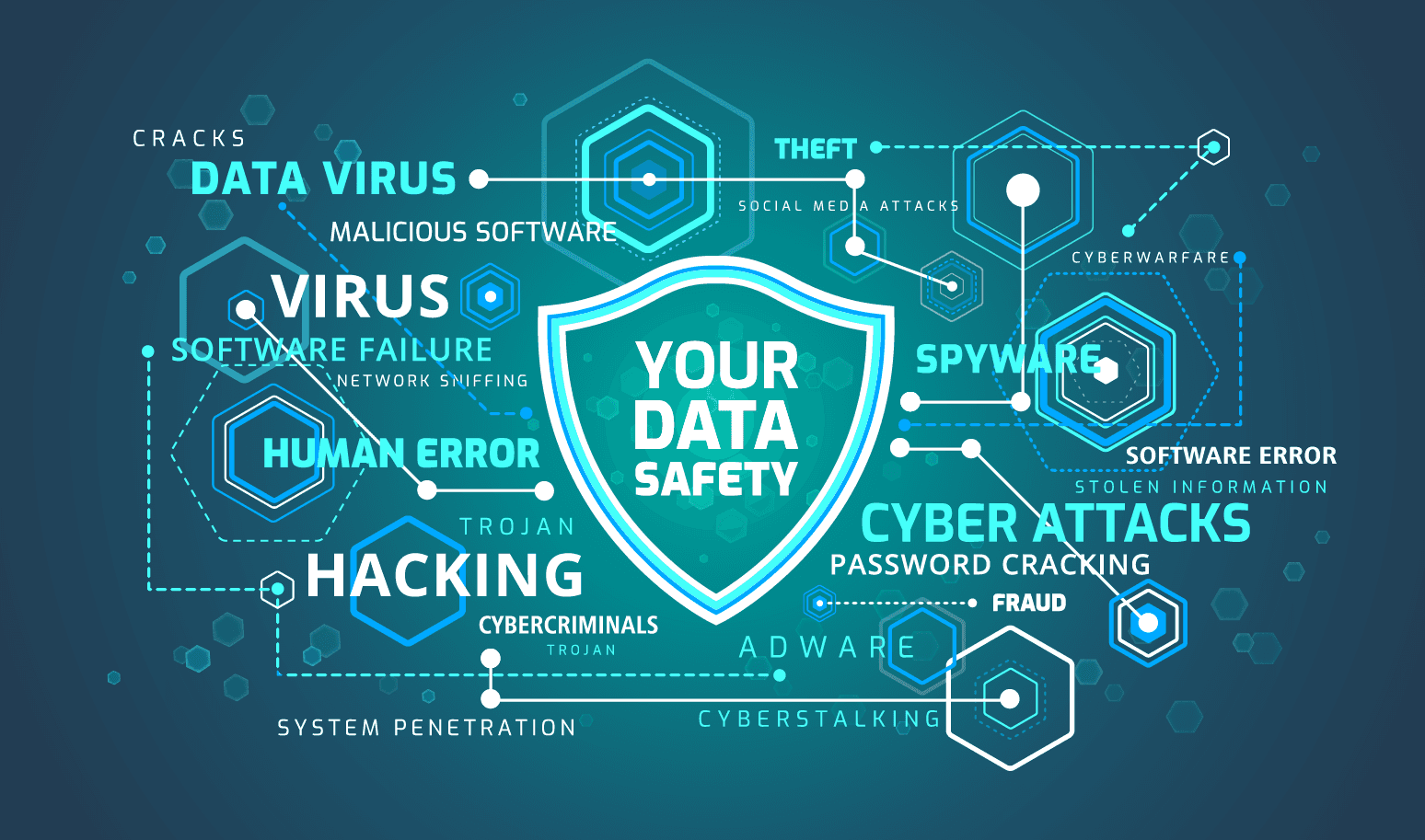
Cybersecurity services help a business protect its computers, networks, applications and data from unauthorised access, misuse and damage. They include checking where you are exposed, putting protective controls in place, watching for signs of an attack and planning how to respond if one happens.
Security work is usually described in three activities. Prevention reduces the chance that an attack succeeds, for example by applying updates, restricting access and filtering network traffic. Detection finds suspicious activity that gets past prevention, through monitoring and alerts. Response limits the damage and restores normal working once an incident has been confirmed. A sound programme needs all three, because prevention alone will never be complete.
Cybersecurity matters for Indian businesses of every size. Companies hold customer records, financial data and business-critical systems that are valuable to attackers and costly to lose, and smaller businesses are often targeted precisely because they have fewer protections. Remote working, cloud services and personal devices have widened the number of places where something can go wrong.
- Phishing emails that trick staff into revealing passwords
- Ransomware that locks files until a payment is made
- Stolen or reused credentials
- Software that has not been updated
- Cloud services left open by mistake
- Staff who have more access than they need
Security controls support business continuity by lowering the likelihood of disruption and making recovery faster and better organised. A review done once becomes out of date as soon as you add a new application, office or cloud account, so regular reviews keep controls matched to the environment you actually have.
A good starting point is simple questions: what data and systems matter most, who has access to them, how are devices and networks protected, what happens if a system is locked or data is lost and where are the gaps. We help you work through them.
What We Offer
Our Cybersecurity Services
Ten service areas make up our cybersecurity offering. You can use them individually or combine them, and the scope of each is agreed in writing before work begins.
11capabilities
Cybersecurity Risk Assessment
A risk assessment looks at your systems, how your business operates and the controls already in place, then identifies and ranks the risks that matter most. A risk rating combines how likely something is to happen with how much harm it would cause.
Incident Response and Recovery
The organised way a business deals with a security event, from preparation through to recovery. Containment means stopping an incident from spreading; remediation means removing the cause and fixing the weakness that allowed it.
Threat Detection and Response
Watching systems and networks for signs of suspicious activity, raising alerts and investigating them. A log is a record of events on a system; a SIEM collects logs from many sources so unusual patterns are easier to find. Tools and alert-review hours are confirmed in the agreed scope.
Network Security Solutions
Protects the connections between your devices, offices, cloud services and the internet. Network segmentation splits a network into separate parts; intrusion detection and prevention systems watch traffic for known attack patterns. Designing and installing a network is a separate project: see [networking and infrastructure](/networking-and-infrastructure).
Managed Security Services
Ongoing management of your security controls by an outside team, carried out on a regular schedule within an agreed scope. General infrastructure monitoring and maintenance sit within our [managed IT services](/managed-it-services).
Security Awareness Training
Teaches employees to recognise and report security problems. Many attacks begin with a person clicking a link or sharing a password. Social engineering is manipulating people into giving up access or information.
Endpoint Security and Protection
Protects the laptops, desktops, workstations and mobile devices your people use. An endpoint is any device that connects to your network. Everyday device faults are handled by [IT support and helpdesk](/it-support-and-helpdesk).
Identity and Access Management
Controls who can sign in to your systems and what they can do once in. Multi-factor authentication asks for a second proof of identity, single sign-on lets users sign in once for several applications and role-based access gives permissions according to job role.
Data Encryption and Protection
Covers how your information is stored, shared and accessed. Encryption turns data into a form that cannot be read without the right key. Encryption at rest protects stored data; encryption in transit protects data as it moves across a network.
Security Audits and Vulnerability Assessments
A security audit reviews your controls, policies and configurations against an agreed scope or standard. A vulnerability assessment looks for known weaknesses in systems and software and ranks them by severity. Our [managed IT services](/managed-it-services) can help carry out the fixes.
Cybersecurity Compliance and Risk Management
Advisory support to help you understand your security obligations, find gaps and prepare documentation and processes. A gap assessment compares what you do now with what a standard expects. Frameworks businesses commonly refer to include ISO 27001, the NIST Cybersecurity Framework, GDPR, HIPAA and PCI DSS; which apply depends on your business and customers.
Defense in Depth
Layered Protection Around Your Business
Our security services stack up as layers, so a threat has to get past every one of them to reach your data.
- L4Cybersecurity Risk Assessment
- L3Incident Response and Recovery
- L2Threat Detection and Response
- L1Network Security Solutions
- Your business, protected at the core
Threats
Common Cybersecurity Threats Businesses Face
For awareness and defence: what each threat means for a business and what usually helps.
Phishing and social engineering
Convincing emails or messages trick staff into revealing passwords or approving payments. Defences: staff training, email filtering, multi-factor authentication and a clear way to report suspicious messages.
Ransomware
Locks or encrypts files and demands payment. Defences: regular updates, restricted access, tested backups kept apart from the main network, endpoint protection and a practised incident plan.
Malware
Viruses, spyware and other harmful software, usually arriving through attachments, downloads or infected devices. Defences: endpoint protection, updates and limits on software installation.
Unauthorized system access
Someone gets into a system, account or device they should not reach. Defences: strong authentication, least-privilege permissions, network controls and monitoring for unusual logins.
Credential theft
Usernames and passwords stolen through phishing or fake login pages, then tried against business systems. Defences: multi-factor authentication, unique passwords and alerts for unusual sign-ins.
Insider risks
Harm caused deliberately or by mistake, such as sending data to the wrong person or keeping access after leaving. Defences: role-based access, access reviews and a leaver process.
Unpatched software
Attackers look for systems that have not applied released fixes. Defences: scheduled updates, a software inventory and regular vulnerability scans.
Misconfigured cloud services
Storage or services left open to the internet by mistake. Defences: configuration reviews, access restrictions and multi-factor authentication. See our cloud services.
Data exposure and breaches
Information seen, copied or taken by someone who should not have it. Defences: access controls, encryption, monitoring and a documented incident process.
Network-based threats
Attempts through open ports, weak remote access and unfiltered traffic. Defences: firewalls, segmentation, secure VPN access and intrusion detection.
Why Cloute
Why Choose Cloute Technologies for Cybersecurity Services?
Business-focused security approach
We begin with what your business depends on and decide what to protect and how, rather than applying a standard checklist. Priorities and scope are agreed in writing.
Assessment and risk reduction
Our approach centres on finding where you are exposed, ranking what matters and fixing it in a sensible order, with the aim of realistic risk reduction.
Integrated networking and infrastructure knowledge
Cloute also designs, installs and manages networks, so security recommendations can take account of how your systems are built. See networking and infrastructure.
Cloud and IT support capabilities
Security work can be coordinated with the teams that run your environment day to day: cloud services, managed IT services and IT support and helpdesk.
Solutions based on business requirements
You choose the services that fit your risk and budget. Each one is scoped, so you know what is covered and what is not.
India-based team
Businesses across India can work with our team remotely or on site. Read more about Cloute Technologies.
How We Work
Our Cybersecurity Assessment and Protection Process
Security Requirement Discussion
We understand your business, the data and systems that matter most, any customer or regulatory expectations and what prompted the enquiry.
IT Environment and Risk Assessment
We review your devices, network, cloud services, access arrangements and existing controls, and identify the risks that apply.
Security Gap Identification
Findings are compared with good practice and your own requirements. Each gap is described and ranked so it is clear which need attention first.
Security Control Planning
We agree which controls to put in place, in what order and with what effort, taking account of budget and the way your teams work.
Implementation and Validation
Agreed controls are put in place and then checked to make sure they work as intended, coordinated with the relevant team where infrastructure is involved.
Monitoring, Review and Improvement
Controls are monitored and reviewed at agreed intervals, and the plan is updated when your systems or risks change.
Compare
Vulnerability Assessment vs Penetration Testing vs Security Audit
These terms are often confused. They answer different questions. This is education and does not mean every activity is included in every engagement. Penetration testing is specialised, with strict rules about permission and scope; if your requirement includes it, tell us when you enquire so we can confirm whether it can be included.
Vulnerability assessment
Identifies known security weaknesses using automated scanning plus manual review, and delivers a list ranked by severity with fix recommendations. Suited to routine health checks and when the environment changes.
Penetration testing
Authorised, controlled attempts to break into systems by specialists, showing whether weaknesses can actually be exploited. Usually used after basic weaknesses have been fixed.
Security audit
Reviews controls, policies and configurations against an agreed standard or scope using document review, interviews and configuration checks. Suited to preparing for a customer review or a standard.
Industries
Cybersecurity Solutions for Different Industries
These are common security needs by sector. The scope of any engagement is agreed after reviewing your own environment.
IT and Software Companies
Source code, development environments, cloud accounts and developer devices: access control, endpoint security and cloud configuration review.
Corporate Offices and Enterprises
Consistent identity management, device protection, network controls, staff awareness and a tested incident process.
Manufacturing
Network separation, update planning that respects production schedules, backup protection and remote access control.
Healthcare
Strict access control, data protection, backups and secure remote access. Regulatory obligations should be confirmed with qualified advisers.
Financial Services
Strong authentication, access reviews, encryption, monitoring and documented risk management. Compliance requirements should be confirmed with qualified advisers.
Retail and E-commerce
Secure web and payment systems, access control, endpoint protection and protection against phishing.
Educational Institutions
Network segmentation, device protection, account management and awareness for staff and students.
Logistics and Supply Chain
Secure remote access, network monitoring, access control for partner systems and backup of operational data.
India
Cybersecurity Services Across India and in India
Cyber risk does not depend on where a business is based. Companies with offices or staff in several Indian cities share the same exposure. Many security services can be delivered remotely over secure connections, including risk assessment reviews, configuration checks, access and policy reviews, awareness training and ongoing monitoring where agreed. Some work needs someone on site, and where that is required the arrangement depends on your location and the scope agreed; it is discussed during scoping and not assumed.
Cloute Technologies is an India-wide IT company with its office at 1125, 21st A-Cross, 14th Main, Sector 3, HSR Layout, Bengaluru, Karnataka 560102. We provide cybersecurity services in India for businesses that want a dedicated team they can work with directly. Typical requirements include securing developer and office devices, controlling access to source code and cloud accounts, separating office and guest networks and preparing documentation for customer security questionnaires.
If you operate from several sites, tell us where they are, what systems each runs and which parts of the work need a visit. We will confirm what can be done remotely and what may need on-site attendance.
Cloute Technologies Pvt. Ltd.
1125, 21st A-cross 14th Main, Sector 3, HSR Layout, Bengaluru, Karnataka, India – 560102
Contact Our TeamOur Clients
Trusted by Businesses Across Industries
From construction and energy to education, travel and non-profits — organisations rely on Cloute Technologies for their IT.

Shapoorji Pallonji 
Envision Energy 
MoveInSync 
Yoti 
almatar 
Trolex India 
Baliga Lighting

The Association of People with Disability 
Dr. G.R. Damodaran College of Education 
Green Agro Pack 
First Systems 
Apeiron 
KSM Traders
FAQ's
Frequently Asked Questions
01What are cybersecurity services?
Cybersecurity services are activities that protect a business's systems, networks, devices and data from unauthorised access and damage. They include assessing risk, putting protective controls in place, monitoring for suspicious activity and preparing to respond to incidents.
02Why do businesses need cybersecurity services?
Businesses need cybersecurity services because attacks target organisations of every size, and the cost of disruption or data loss is usually higher than the cost of prevention. Many businesses do not have in-house specialists, so an outside provider can assess risk, set up controls and keep them under review.
03Which companies provide cybersecurity services in India?
Many companies provide cybersecurity services in India, ranging from large global firms to specialist and regional providers, and Cloute Technologies, based in India, is one of them. When comparing providers, look at the services offered, the scope in writing, the tools and processes used, the support hours, how reporting works, relevant experience that can be verified and how clearly they explain limits.
04What cybersecurity services does Cloute Technologies offer?
Cloute Technologies offers cybersecurity risk assessment, incident response and recovery support, threat detection and response, network security, managed security services, security awareness training, endpoint security, identity and access management, data encryption and protection, security audits and vulnerability assessments, and cybersecurity compliance and risk management support. The scope is agreed with each client.
05What is the difference between cybersecurity assessment and penetration testing?
A cybersecurity assessment identifies and ranks weaknesses and risks, while penetration testing is a controlled, authorised attempt to break into systems to show what an attacker could actually reach. Assessments are broader and are usually done first. Penetration testing is more specialised and is often used once basic weaknesses have been fixed.
06What is vulnerability assessment in cybersecurity?
A vulnerability assessment is a structured check that finds known weaknesses in systems, networks and applications and ranks them by severity. It typically combines automated scanning with manual review, and it ends with a report of what to fix first. It identifies weaknesses but does not try to exploit them.
07How can businesses reduce ransomware risks?
Businesses can reduce ransomware risk by combining several measures, because no single one is enough. Keep software and devices updated, use multi-factor authentication, limit who can access what, run endpoint protection, train staff to spot phishing and keep backups that are tested and stored apart from the main network. A written incident plan helps you respond quickly if an attack still succeeds.
08What is the role of endpoint security?
Endpoint security protects the devices people use, such as laptops, desktops and mobile phones, from malware, ransomware and unauthorised use. Because these devices connect to email, websites and external storage, they are among the most common ways attackers get in. It usually covers protection software, updates, device settings and access controls.
09What is identity and access management?
Identity and access management is the set of processes and tools that control who can sign in to your systems and what they are allowed to do. It typically includes multi-factor authentication, single sign-on, role-based permissions and reviews of who has access. It reduces the risk of unauthorised access but cannot remove it.
10How much do cybersecurity services cost in India?
The cost depends on the scope, and Cloute Technologies agrees pricing after understanding your requirements. The main factors are the number of users, devices, servers, locations and cloud services involved, the type of service chosen, whether the work is a one-time assessment or ongoing management, the support hours needed and whether on-site work is required. Ask for a written quotation that lists what is included.
11Does Cloute Technologies provide cybersecurity services in India?
Yes, Cloute Technologies provides cybersecurity services in India from its office in HSR Layout, Bengaluru. Businesses across India can work with our team remotely, and on-site work can be discussed as part of the agreed scope.
12How can I contact Cloute Technologies for cybersecurity requirements?
You can contact Cloute Technologies by emailing sales@cloute.co.in, calling +91 9952110515 or using the [contact page](/contact). Our office is at 1125, 21st A-Cross, 14th Main, Sector 3, HSR Layout, Bengaluru, Karnataka 560102. Please do not send passwords or vulnerability details through the form. Tell us about your systems and what you want to protect, and we will suggest a suitable scope.




Strengthen Your Business Cybersecurity with Cloute Technologies
If you are not sure where your biggest security gaps are, a conversation is a good place to start. Tell us about your systems, your locations and what worries you most, and we will discuss how assessment, protection and incident readiness could fit your business.